Sporcle : Play Trivia Quizzes
- 4.4
- Rating
- 100.00K
- Installs
- Free
- Price

 Analysis by App-foxy
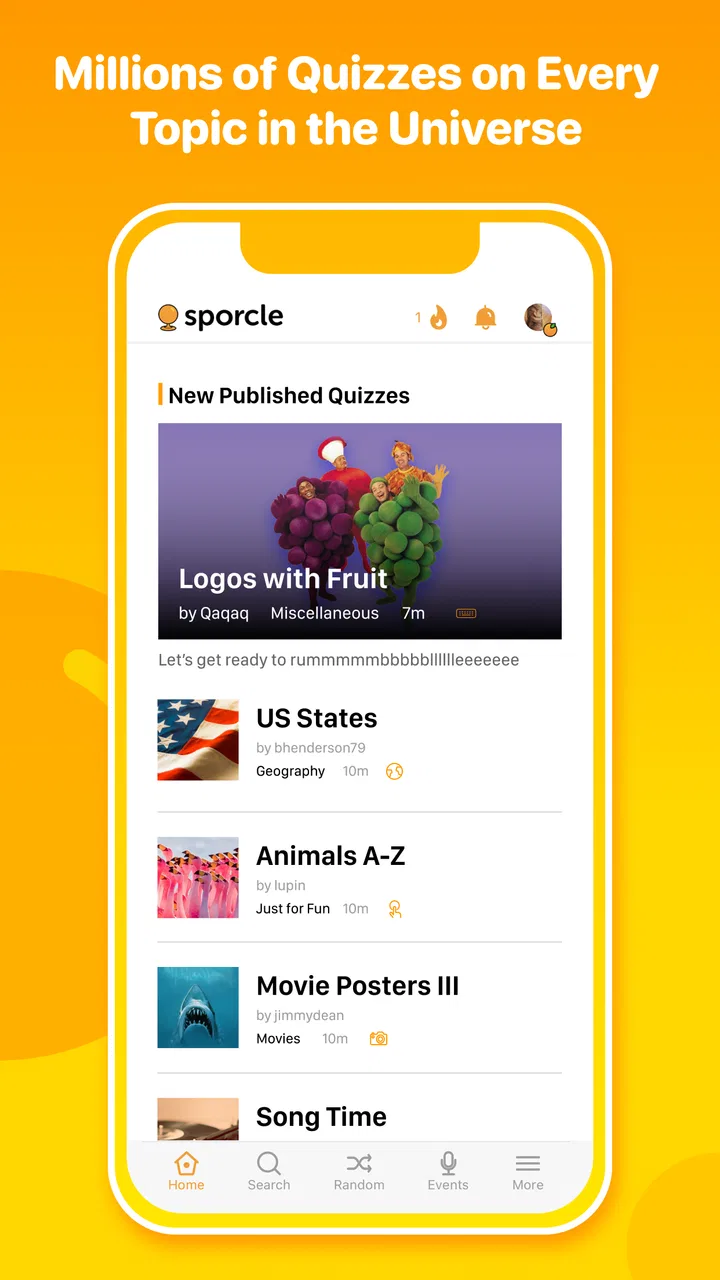
I came to Sporcle: Play Trivia Quizzes expecting a straightforward quiz app, but its real appeal is broader: it turns the Sporcle catalogue into something I can dip into whenever I have a few spare minutes. It is a free trivia game from Sporcle, Inc., aimed at people who enjoy testing memory, recognizing patterns, and chasing the satisfying moment when an answer finally comes to mind.
My overall view is positive, with one important qualification. This is best understood as a large playground for quiz fans rather than a carefully guided course in general knowledge. It gives me plenty of ways to challenge myself, but the quality of an individual session depends heavily on the quiz I choose and on how much time I want to spend browsing. If I already enjoy trivia, that freedom is a strength. If I want a tightly structured daily game with a clear beginning and end, a more focused alternative may suit me better.
What makes the quiz experience work
The strongest part of the game is the variety of ways it lets me approach trivia. I can treat it as a quick distraction while waiting somewhere, or as a longer session in which I deliberately choose a subject I know well. That difference matters because trivia is much more enjoyable when the challenge feels personal. A quiz about familiar films, geography, music, sport, or history gives me a reason to keep going, while an unfamiliar subject can become an opportunity to learn rather than simply a score to endure.
You May Also Like

 Pandora - Music & Podcasts
Pandora’s Music Is Easy to Start, but Harder to Recover
Pandora’s strength is its low-effort path from a seed to a station. Its weak spot is how much confidence it asks you to place in connection, setup, and quiet recovery.

 AccuWeather: Weather Radar
AccuWeather Review: A Quick, Clear Forecast for Everyday Decisions
For everyday plans, the best forecast is the one you can understand quickly. AccuWeather makes rain timing, radar, and local conditions easy to act on, with a few trade-offs.

 Hill Climb Racing
Why Hill Climb Racing Still Turns Crashes Into One More Run
A tiny car, a bumpy hill and one more upgrade: Hill Climb Racing keeps resurfacing because its simple chaos makes every near-miss feel personal.

 AliExpress - Shopping App
AliExpress Makes Global Shopping Feel Personal, but Shoppers Bear the Risk
AliExpress turns a global marketplace into a pocket-sized discovery engine. Its reach is useful, its shopping loop compelling, and its trade-offs easy to miss.

 Lords Mobile: Kingdom Wars
Lords Mobile Is a Kingdom-Building Routine, Not a Quick Match
A case-by-case verdict on the building, battles, device demands, and social commitments that make Lords Mobile rewarding for some players and exhausting for others.

 PDF Scanner app - TapScanner
TapScanner Makes Paperwork Easier to Capture, Check, and Share
TapScanner makes scanning with a phone feel less like a rescue operation and more like a dependable step in getting work done. Its capture tools are useful, though not flawless.
More From Our News Desk
View All News


The app’s identity is tied to the wider Sporcle quiz ecosystem, so it feels less like one fixed quiz format and more like a collection of challenges. That makes it easier to return after a break. I am not locked into repeating the same type of question every time I open it. The practical advantage is replay value: my mood can determine whether I want something easy, specialist, nostalgic, or deliberately difficult.
I also like the way this encourages self-awareness. After a few sessions, I start noticing the difference between knowledge I can recall instantly and knowledge I only recognize after seeing a clue. That makes the game useful for more than winning. It exposes gaps in memory, shows which subjects I genuinely understand, and reveals where I have been relying on vague familiarity.
A realistic everyday use is a short commute or a lunch break. I might begin with the intention of playing one quiz, choose a topic I recognize, and use the result to decide what to try next. If I perform well, I can raise the difficulty or switch to a narrower subject. If I struggle, I can move toward something more approachable instead of ending the session frustrated. That flexibility is more valuable to me than a single fixed challenge that may not match my energy that day.
Another useful approach is to use it socially without needing a formal multiplayer setup. I can hand the phone to a friend and compare answers, or use a quiz as a conversation starter during a gathering. The best moments often come from arguing over an answer, remembering an obscure fact together, or discovering that someone’s supposed weakness is actually their strongest category. It works particularly well for groups who enjoy friendly competition but do not want to learn complicated rules.
Choosing quizzes with more intention
One of my main tips is not to select challenges randomly every time. I get more from the game when I decide what kind of session I want before browsing. For a short break, I choose a familiar topic and avoid anything that looks likely to require extended concentration. For a longer session, I deliberately pick a subject outside my comfort zone and treat the result as practice rather than a judgment of my intelligence.
A second tip is to use mistakes as a personal study list. When I miss an answer, I try to remember why: did I confuse two similar names, forget a date, overlook a clue, or simply rush? That small habit changes the experience from passive guessing into active recall. On a later visit, I can return to the same subject with a clearer idea of what needs attention.
I also find it helpful to separate speed from knowledge. A quick answer feels impressive, but rushing can turn a question I know into an avoidable mistake. When a quiz rewards rapid recall, I try to read the wording carefully before committing. This is especially useful with questions that distinguish between related people, places, titles, or events. The game becomes less about pressing quickly and more about reading accurately under pressure.
For families, the age guidance is Everyone 10+, which makes it a reasonable choice for older children and adults who want a shared trivia activity. I would still choose topics with care for younger players, because a general age label does not guarantee that every subject will be equally interesting or suitable for every child. An adult can make the experience better by helping select approachable quizzes and treating wrong answers as part of the fun rather than turning the session into a test.
It is also worth remembering that this is a game, not a dependable reference source. Trivia questions are designed for play, and I would not use a result as the final word in a serious discussion. If an answer matters beyond the game, I would verify it elsewhere. That does not reduce the entertainment value; it simply keeps the expectations sensible.
Where the freedom becomes friction
The same breadth that gives the app replay value can make the experience feel less directed. I sometimes want the app to tell me exactly what to play next, especially when I am tired or only have a few minutes. A large selection is helpful when I am curious, but it can also create decision fatigue. Instead of answering questions, I may spend too long deciding which quiz deserves my attention.
This is the most meaningful weakness for me. A tightly designed daily trivia app usually gives me a compact routine: open it, answer a set of questions, see a result, and return tomorrow. Sporcle’s broader approach is better for exploration, but it may require more initiative. People who prefer a predictable streak, a single daily target, or a strongly guided progression may find the experience less satisfying than a specialist alternative.
There is another trade-off in the catalogue-style approach. Not every quiz will match my preferred difficulty, wording, or subject depth. One challenge may feel perfectly balanced, while another may depend on very specific knowledge. That unevenness is part of browsing a broad collection, but it means I should not judge the whole game by one awkward session. I get better results when I move on quickly from a quiz that does not suit me rather than assuming the entire app will feel the same.
The free entry point is welcome, but the presence of in-app purchases means I would pay attention before confirming any optional purchase. Items range from $1.99 to $59.99 each, so the possible spending range is significant even though the game itself is free to start. My advice is simple: enjoy the free experience first, decide whether any paid element genuinely improves the way you play, and avoid buying merely because a difficult quiz has made you impatient.
That payment model also affects who should skip it. If I want an entirely frictionless experience with no commercial prompts or purchase decisions, I would look for a paid-up-front trivia game or a simpler offline option. Likewise, someone who dislikes browsing large collections may prefer a focused app built around one daily challenge. Sporcle is more appealing to players who value choice enough to accept a little extra navigation.
How it compares with familiar trivia alternatives
Compared with a traditional pub-quiz format, this game is more convenient and private. I do not need a group, a host, a fixed schedule, or a table full of answer sheets. I can play alone and still get the mental spark of trying to retrieve facts under pressure. The compromise is that I lose some of the laughter and debate that make a live quiz memorable.
Compared with a daily trivia app, it offers more room to follow my interests. A daily format is excellent when I want a habit that takes only a few minutes and gives me a neat finish. Sporcle is stronger when I want to continue into another topic, change the level of challenge, or explore something specific. I would choose the daily option for routine and this game for variety.
Compared with a general search engine, the difference is motivation. I could look up facts whenever curiosity strikes, but searching removes the useful uncertainty of trying to remember first. Here, I have to make a decision before seeing the answer. That makes the learning moment stick better for me, particularly when I miss something I thought I knew.
Compared with trivia board games, it is easier to start and easier to play alone. A board game creates a richer social event, but it requires preparation and other people. This app works when I have no one available or when I want a small mental challenge rather than an evening activity. Neither replaces the other; they serve different situations.
Who will get the most from it
I would recommend this game most strongly to people who already enjoy quiz nights, pub quizzes, word puzzles, or collecting unusual facts. It is also a good fit for players whose interests are specific rather than broad. Someone who loves one particular area can spend time building confidence there, then use that confidence as a bridge into harder subjects.
It suits learners who enjoy discovering what they do not know, provided they are comfortable with an informal approach. I like that a poor result does not have to end the session. I can treat it as a prompt to explore a topic, remember a name, or notice a connection. That mindset makes the game more rewarding than simply chasing a perfect score.
I would be more cautious recommending it to someone who needs a clear progression system. If your ideal game presents a carefully measured sequence of lessons, tracks improvement in a formal way, and always supplies one obvious next step, this may feel too open-ended. The freedom is the point, but freedom can feel like work when I am looking for structure.
The store listing shows a 4.6 average from around 2.7 thousand ratings, with over 100 thousand installs, so it has attracted a substantial audience without being something I would describe as ubiquitous. It was released on March 23, 2023, and the current version is 1.0.31. On a compatible device running at least iOS or Android version 10, those details place it in a fairly accessible range for many current phones.
I would also keep the device requirements in mind before downloading. The minimum operating system is version 10, and that applies whether I am considering it for my own phone or for a family member’s older device. The game is free, which lowers the barrier to trying it, but the optional purchase range means I would still approach it with the same spending awareness I use for any free-to-start title.
My final recommendation
After spending time with it, I see Sporcle as a flexible trivia shelf rather than a single polished contest. Its best quality is the ability to match the game to my mood: quick or extended, familiar or obscure, relaxed or competitive. That makes it unusually easy to revisit, and it gives curious players more control than a narrowly scripted quiz app.
Its main limitation is inseparable from that strength. I have to do more of the choosing, and the experience may vary from one quiz to another. The purchase range also deserves attention, particularly for anyone handing the device to a child. These are manageable concerns, but they are real enough that I would not recommend it blindly to every trivia fan.
For me, the deciding question is whether I want variety or routine. If I want a broad supply of trivia challenges and enjoy choosing my own direction, this is an easy game to keep installed. If I want one perfectly balanced daily round with minimal browsing, I would choose a more focused competitor. My recommendation is to try the free version with a clear spending limit and a deliberate quiz-selection habit; for curious players who enjoy learning through mistakes, it offers far more lasting value than its simple store summary suggests.
FAQs for Sporcle : Play Trivia Quizzes
01What is Sporcle: Play Trivia Quizzes?
Sporcle: Play Trivia Quizzes is an engaging app that offers a wide variety of trivia quizzes on numerous topics. Users can challenge their knowledge in categories like history, sports, entertainment, and more. It's a fun way to learn and compete with friends or other users worldwide.
02Is Sporcle available on both Android and iOS?
Yes, Sporcle is available for download on both Android and iOS platforms. Users can easily find the app in the Google Play Store for Android devices and the Apple App Store for iOS devices. This ensures that a wide range of users can access the app regardless of their device.
03Does Sporcle require an internet connection?
While Sporcle offers some offline features, a stable internet connection is recommended to access the full range of quizzes and compete in real-time challenges. An internet connection ensures users can enjoy the most up-to-date content and participate in global leaderboards.
04Are there in-app purchases in Sporcle?
Sporcle offers in-app purchases that enhance the user experience. While the app provides plenty of free content, users can purchase additional quiz packs or remove ads for a more seamless experience. These options are entirely optional and not necessary to enjoy the core features.
05Is Sporcle suitable for all age groups?
Sporcle is designed to be family-friendly and can be enjoyed by users of all ages. However, some quizzes might be more challenging and better suited for older users. Parents can review the available categories to ensure content is appropriate for younger audiences.
Pros
- Wide variety of quiz topics available.
- Interactive and user-friendly interface.
- Regularly updated with new quizzes.
- Offline mode for quiz access without internet.
- Engaging multiplayer mode for competition.
Cons
- Limited customization for quiz creators.
- Some quizzes require in-app purchases.
- Occasional ads can disrupt gameplay.
- No option to save progress in guest mode.
- Leaderboard system can be inconsistent.

Sporcle : Play Trivia Quizzes
Gallery